Showing posts with label MS. Show all posts

Apr 8, 2019

Beat Autoimmune: The 6 Keys to Reverse Your Condition and Reclaim Your Health

Hello friends,

This week, I have a book review that all of you with autoimmune issues will find interesting "Beat Autoimmune: The 6 Keys to Reverse Your Condition and Reclaim Your Health" by Palmer Kippola.  Palmer Kippola reversed her Multiple Sclerosis by finding and removing her triggers and healing her gut.  I discovered her website/blog after reading the book and am so happy I did.

It is no surprise she went on to write a book to share all of this excellent information with all of us! Click here to go to her website for more information.


“Beat Autoimmune serves up proven ways to address the root causes of autoimmune disorders. If you’re ready to reclaim your health, I highly recommend reading this book and following the steps that Palmer has laid out. It could transform your life.” – Dr. Josh Axe, DNM, DC, CNS


Beat Autoimmune: The 6 Keys to Reverse Your Condition and Reclaim Your Health Beat Autoimmune: The 6 Keys to Reverse Your Condition and Reclaim Your Health by Palmer Kippola
My rating: 4 of 5 stars

I too have a form of MS and other autoimmune diseases. I have a friend who has done lots of research in this area and tells me similar information. I'm finding this to be an excellent resource and recommend it for anyone battling MS or other autoimmune conditions such as Lyme, Hashimoto's, fibromyalgia, etc.

After doctors told her the only treatment was to take medicine and she would be confined to a wheelchair, Palmer searched for other answers. Was a good thing, too, because she reversed her MS through nutrition and lifestyle. ( I must profess this is where I struggle, the diet and nutrition aspect) The author has carefully put all the research into one place which is very helpful. . The "toolkit" approach contained in this book is full of actionable steps you can take to figure out your root cause triggers and start to heal. I highly recommend adding this to your arsenal against Autoimmune disorders.

I requested and received a digital copy from Kensington Books via Netgalley, all opinions are my own.

View all my reviews

Thank you for stopping by and visiting my little blog!
I always love reading comments and getting to know my readers.

Hugs,


Follow my blog with Bloglovin

Jan 11, 2019

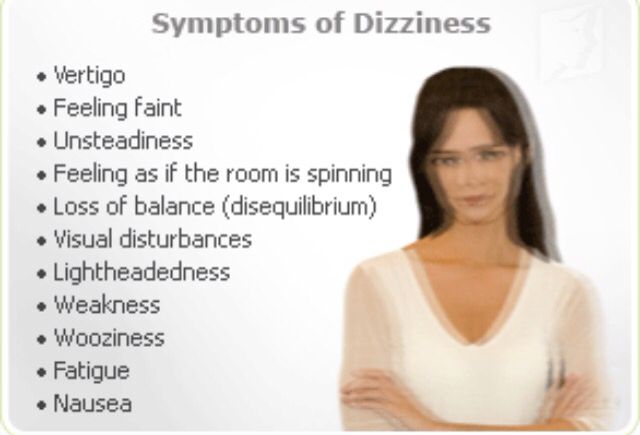
Fibromyalgia Dizziness, Balance and Falls

Hello friends,
This is a problem I have suffered with most of my life as I lost the hearing in my left ear at age 5, causing my equilibrium to be off.  But 11 years ago it became decidedly worse with the onset of fibromyalgia, clinical MS and my chronic migraines.  My husband and i tended to joke about it but it became dangerous at times especially if on the stairs. 
In fibromyalgia, dizziness, poor balance, and falls are common complaints. For some people, these can be a  minor annoyance that pops up on occasion. In others, they can be severely debilitating and lead to regular injuries.
Falling, and especially falling frequently, is a serious problem. The last thing you need when you're already in constant pain is to hurt yourself all the time. Frequent falls or balance problems can also lead to a fear of falling.
That fear can, in turn, can make you afraid to remain active, even within your limits. 
Falling is less a symptom and more a consequence of the symptoms of dizziness and poor balance.  With this condition, falls and balance problems may also be related to changes in how we walk.
So why does fibromyalgia include these problems? And what can we do about them?


Fibromyalgia & Dizziness
In fibromyalgia, dizziness most often comes on when you first stand up. It's similar to the feeling of a "head rush" from when you stand up too quickly, only it can happen any time you go from lying down or sitting to standing up. The sudden onset of dizziness can make you sway on your feet, stagger, or it may even make you fall or faint.
Dizziness and fainting in this condition may be tied to a particular subgroup, according to a 2017 study published in the European Journal of Pain.
In addition to dizziness and fainting, this subgroup also had the highest pain levels as well as a variety of symptoms and overlapping conditions including cognitive dysfunction ("fibro fog"), irritable bladder, vulvodynia, and restless legs syndrome.
Research suggests that this symptom stems from dysfunction of the autonomic nervous system (ANS), which is called dysautonomia.
The ANS is involved with a lot of critical functions in your body, including heart rate, blood pressure, respiratory rate, body temperature, metabolism, and digestion.
Dizziness resulting from dysautonomia can be called orthostatic intolerance, neurally mediated hypotension, or postural orthostatic tachycardia syndrome (POTS). Essentially, these things mean that the heart and the brain aren't communicating properly with each other.
What should happen is that when you stand up from a lying or sitting position, the ANS increases your blood pressure in order to fight gravity and keep a sufficient supply of blood in your brain. With dysautonomia, this doesn't happen like it should. Instead, the blood pressure can actually drop when you stand, and the result is dizziness or lightheadedness. In POTS, the heart rate speeds up as blood pressure drops.
Dizziness may be associated with heart palpitations, blurred vision, increased pulse rate, chest pain, and a type of fainting called vasovagal syncope.
Not everyone with fibromyalgia-related dizziness faints, though. In a 2008 study, researchers say dizziness and palpitations were more common than fainting. They also say POTS was one of the most common fibromyalgia symptoms they observed during tilt-table tests, which measure your response to changes in position.

Alleviating Dizziness & Fall Risk in Fibromyalgia
The more successful you are at treating your fibromyalgia, the less these symptoms should be a problem. However, if they need more attention or you've been unable to find effective fibromyalgia treatments, you have several options.
For dizziness from POTS, orthostatic hypotension, or neurally mediated hypotension, your doctor may be able to recommend medications that help. These can include:

  • SSRI/SNRIs
  • benzodiazepines
  • beta blockers
Some of these drugs may help alleviate other fibromyalgia symptoms, as well—SSRIs and SNRIs are commonly prescribed for this illness. Your doctor may also recommend lifestyle changes.
If you smoke, research published in the rheumatologic journal Joint, Bone, Spine suggests that quitting may help alleviate fainting and several other symptoms of fibromyalgia.
When it comes to balance and gait, physical therapy is a common treatment. 
You might also want to ask your doctor whether something like yoga, tai chi, aquasize is safe for you.

Until you find ways to improve these symptoms, it pays to be careful. Assistive devices such as a cane or walker may help keep you on your feet. Seated exercises may be the safest option, and they're certainly a better choice than being less active than you can be.

Thank you for stopping by and visiting my little blog!
I always love reading comments and getting to know my followers.

Hugs,


Follow my blog with Bloglovin Follow my blog with Bloglovin

Sep 12, 2014

Looking Back - My Story (Post from January 19, 2014)

January can be the perfect time to reflect on the past year, your triumphs, and heartaches and set new goals for the future.  As I look back, I am amazed at how much has happened this last year to friends, family and myself.  When I remember how he (God/higher spirit) has brought me through many trials and tribulations in my past, I have confidence and faith that he will see me through anything I will have to face in the future.  The loss of my father this last year has affected me in a way I never thought it could, I miss him every day, in the beginning when I got really depressed, he came to me in a dream and told me everything would be okay, sure enough a few days later my step-sister contacted me which really set my mind and heart at ease.
It is so funny how you never really hear much about something but as soon as it happens to you or a friend all of a sudden you notice how many commercials or people you know have someone in their life with the same issues Cancer/MS/Fibro.

7 years ago I did not know much about MS other than my grandfather had it and a general idea what it was.  Once it was suspected that I had MS, I found out lots of people I knew had someone in their family that has or had it, now with the diagnosis of Fibromyalgia on top of the MS, all I see is ads for it and Dr. Oz did an episode too.  Now I find out I have a few friends suffering the same as me.  I really feel for anyone going through this as you never know from day to day what you will feel like and it is frustrating, or you have to deal with people looking at you like “you look fine, so must be in your head”

I try to remind myself that there are worse things that could happen or someone worse off than me so do not be sad just smile and suck it up you can get past the pain or fatigue. People are always saying just don’t think about it but the more you try to forget about it, the more your brain likes to think of every little thing.

I really need to understand the importance of distraction and the necessity to have fun in my life (for me it is crafting).

I may have MS and Fibromyalgia, but it does not have me. I cannot and will not let illness and pain rule my life or define who I am.

“For women coping with fibromyalgia, there is often a feeling of immense pressure to live up to others’ seemingly impossible standards and they feel frustration, shame, and high levels of stress when they cannot meet these expectations.”

I find this to be true with me, I have always been a people pleaser,neat freak, and have a hard time saying no. But on the other hand when I feel I have not pleased someone I am much harder on myself than the average person might be.  I tend to fall into “Unhealthy guilt”, which is the kind of guilt you feel about things that we have no control over, like my illness. This kind of guilt serves no purpose, makes us suffer for something that is not our fault, and frequently leads to self-hatred and feeling like a failure.  When I cannot go to work, or am too tired to clean the house or have to cancel plans I beat myself up inside and get really upset but try not to show it, or I make myself do it even though I will pay for it later on.  Little comments by friends or hubby whether joking or serious really cuts to the bone.  What people seem to not understand are some days I have to make a decision to either shower or fix something to eat because doing one thing just exhausts me beyond belief.  I am told “NO” you can do this and work 8 hours then travel home and continue on with your schedule but in reality what happens is I shower, cry then finally get dressed go to work. Day one might not be too bad but by day two, I struggle through the day with a migraine brought on from the fluorescent lights etc. then finally get home and all I can do is go to bed, might sleep an hour but wake up with leg/hip pain burning in feet calves, pain in wrists and fingers. Next thing I know the alarm is going off 4:30am time to do it all over.  What kind of quality of life is this for anyone?  You get told it is psychosomatic yet you tell yourself every day I wish I was better and life would go back to normal so if psychosomatic then why aren’t I better.  I feel guilty for disappointing everyone I work with and my husband, family and friends.  I cannot remember what normal is anymore as it has been so long, I want to be happy and my husband be happy and not worry so much.  Thanks for listening, it felt good to write this and get stuff out.  Now on to happier things like a card or funny post tomorrow.
Hugs, Karen

A Mother's Day Murder by Mary Grand

Hello my cozy friends,  Today I am reviewing “A Mother's Day Murder” by Mary Grand the 1st instalment in the " The   Dorset Killing...